
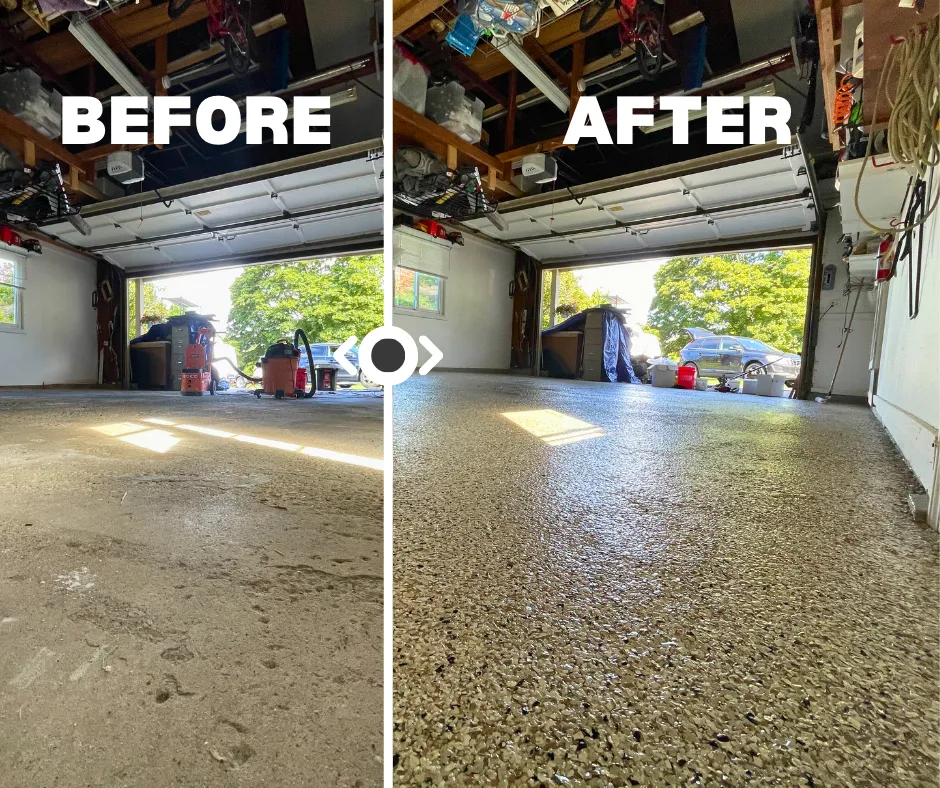
Epoxy vs. Polyurea for Garage Floors: Understanding Adhesion and Moisture Performance
Epoxy vs. Polyurea for Garage Floors: Understanding Adhesion and Moisture Performance
In Rochester and the surrounding areas—like Penfield, Fairport, Webster, Greece, and beyond—polyurea gets pushed hard for its quick installs and tough, flexible finish. Competitors blast ads about fast cures and "no downtime," but we at 585 Epoxy Solutions install both epoxy and polyurea (plus urethane cement for heavy industrial jobs). The real story? Neither wins every garage. It depends on your concrete slab—especially moisture from our snowy winters, meltwater, and groundwater push.
Most of our garage systems finish with a polyaspartic topcoat, so both options end up with the same high-gloss, UV-stable, chemical-resistant shine that holds up to Rochester road salt and tire marks. The big difference is underneath: how well the base coat (epoxy or polyurea) adheres to the concrete and handles moisture vapor transmission (MVT) rising from below.
Moisture Vapor Transmission (MVT) and Adhesion: Why It Matters in Rochester Our concrete slabs deal with freeze-thaw cycles, melting snow tracked in, high humidity, and seasonal groundwater. This creates hydrostatic pressure and vapor that pushes upward, risking bubbles, peeling, or delamination if the bond isn't strong. We always test with a moisture meter (calcium chloride or RH probe) first—no assumptions.
Epoxy base coats (with dedicated moisture vapor barrier/MVB primers) bond deeply: they penetrate pores for mechanical grip and block high MVT. Reputable MVB epoxies control up to 25 lbs per 1,000 sq ft per 24 hours (ASTM F1869 test) or high relative humidity levels. This resists pressure buildup, keeping the coating locked in even on damp or older slabs common around here. Pull-off adhesion tests often exceed 400 PSI, with concrete failing before the coating.
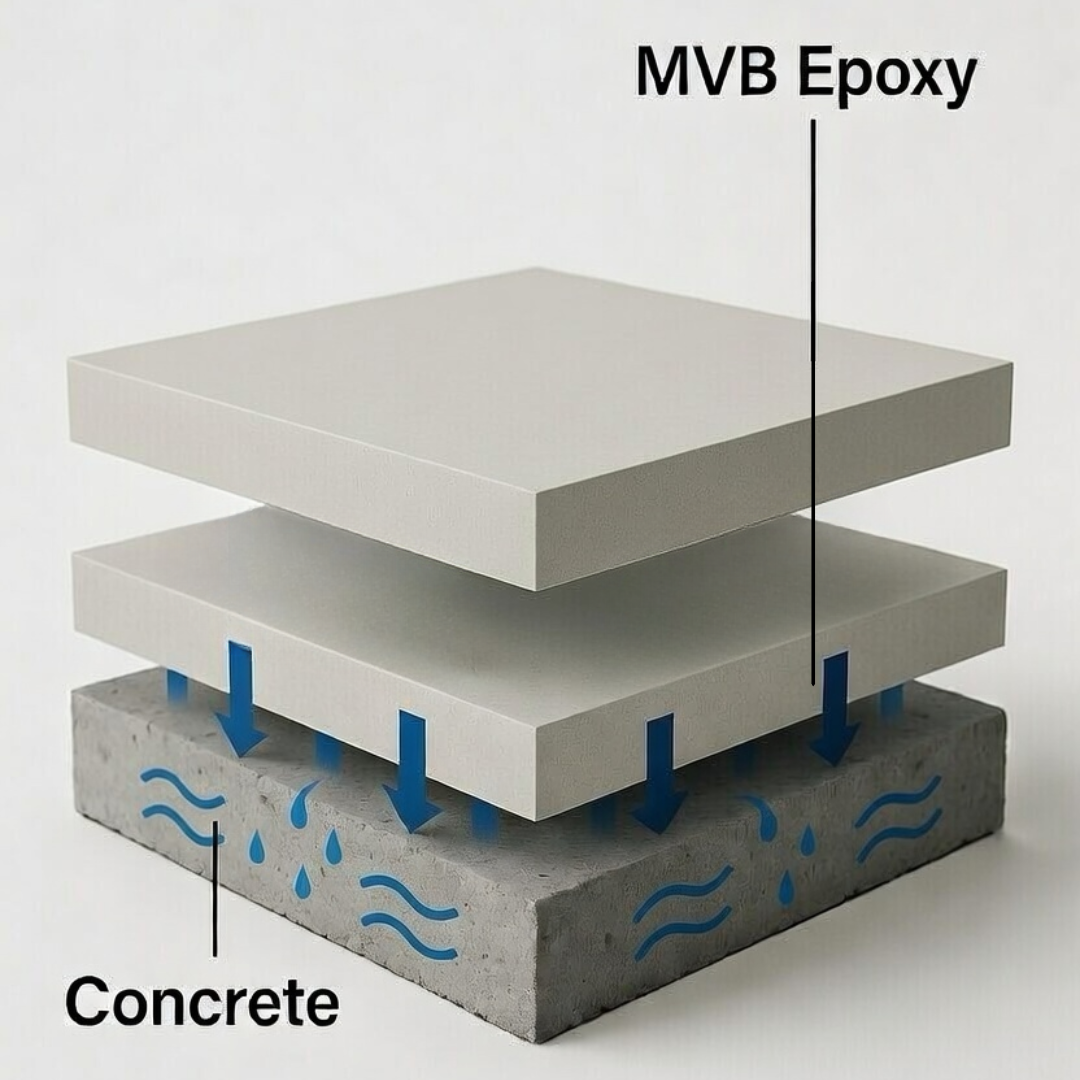
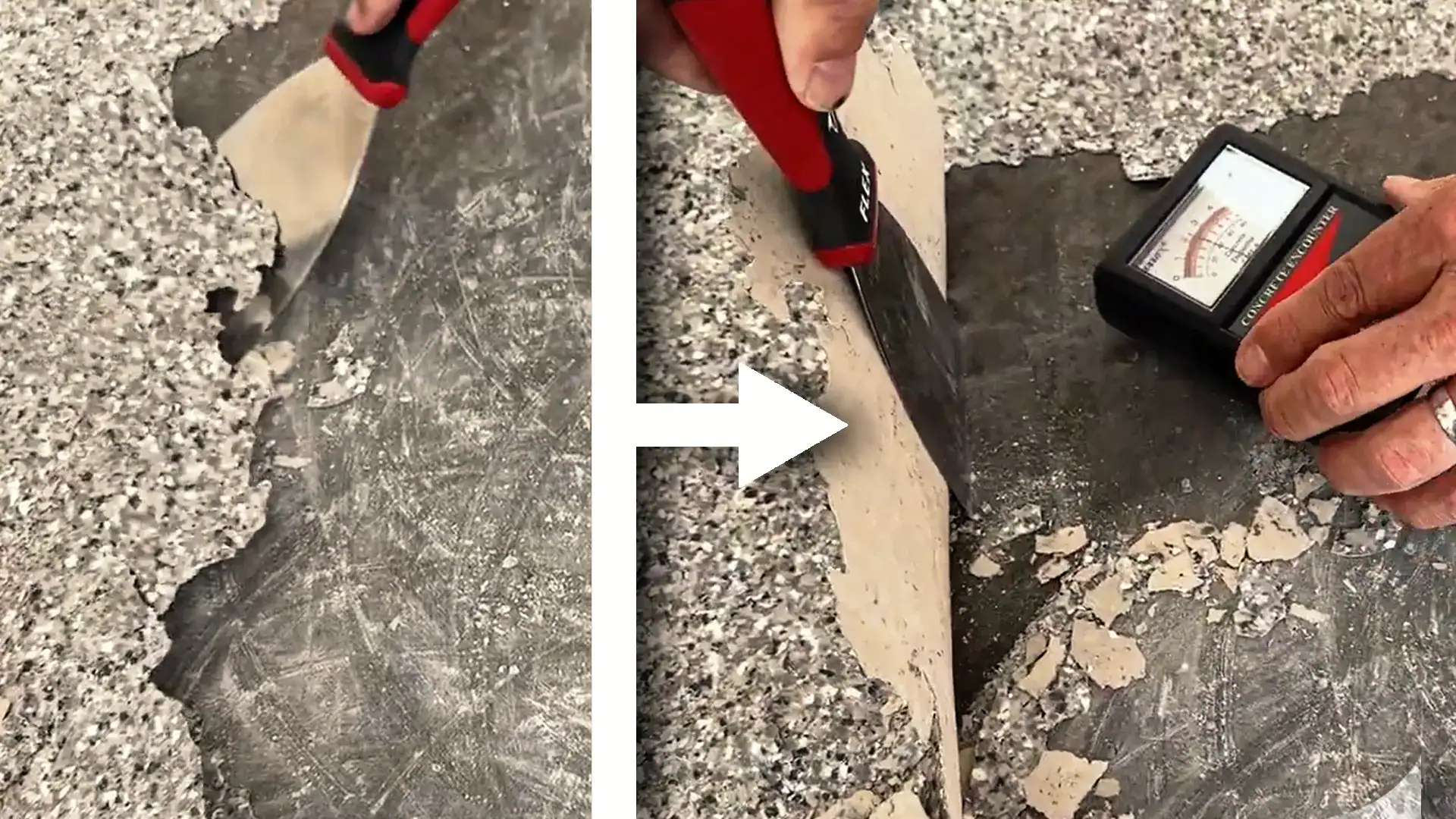
Polyurea base coats cure super-fast (hours, not days) and flex with temperature swings—great for our cold snaps and hot summers. They're tough against chemicals and quick to traffic. But standard polyurea has lower MVT tolerance (typically 3–5 lbs per 1,000 sq ft without a separate barrier), and adhesion can weaken if vapor exceeds that. It relies more on a dry, well-prepped slab; otherwise, pressure can lift it over time.
Quick Comparison for Rochester Garages
Epoxy base (with MVB primer): Superior MVT block (up to 25 lbs/1,000 sq ft/24 hrs), deeper long-term adhesion, ideal for moisture issues from snow melt or groundwater. Slower full cure but rock-solid bond in tough conditions.
Polyurea base: Faster cure, more flexible, shines on dry slabs or quick jobs. Lower MVT tolerance—needs very low moisture for best adhesion.
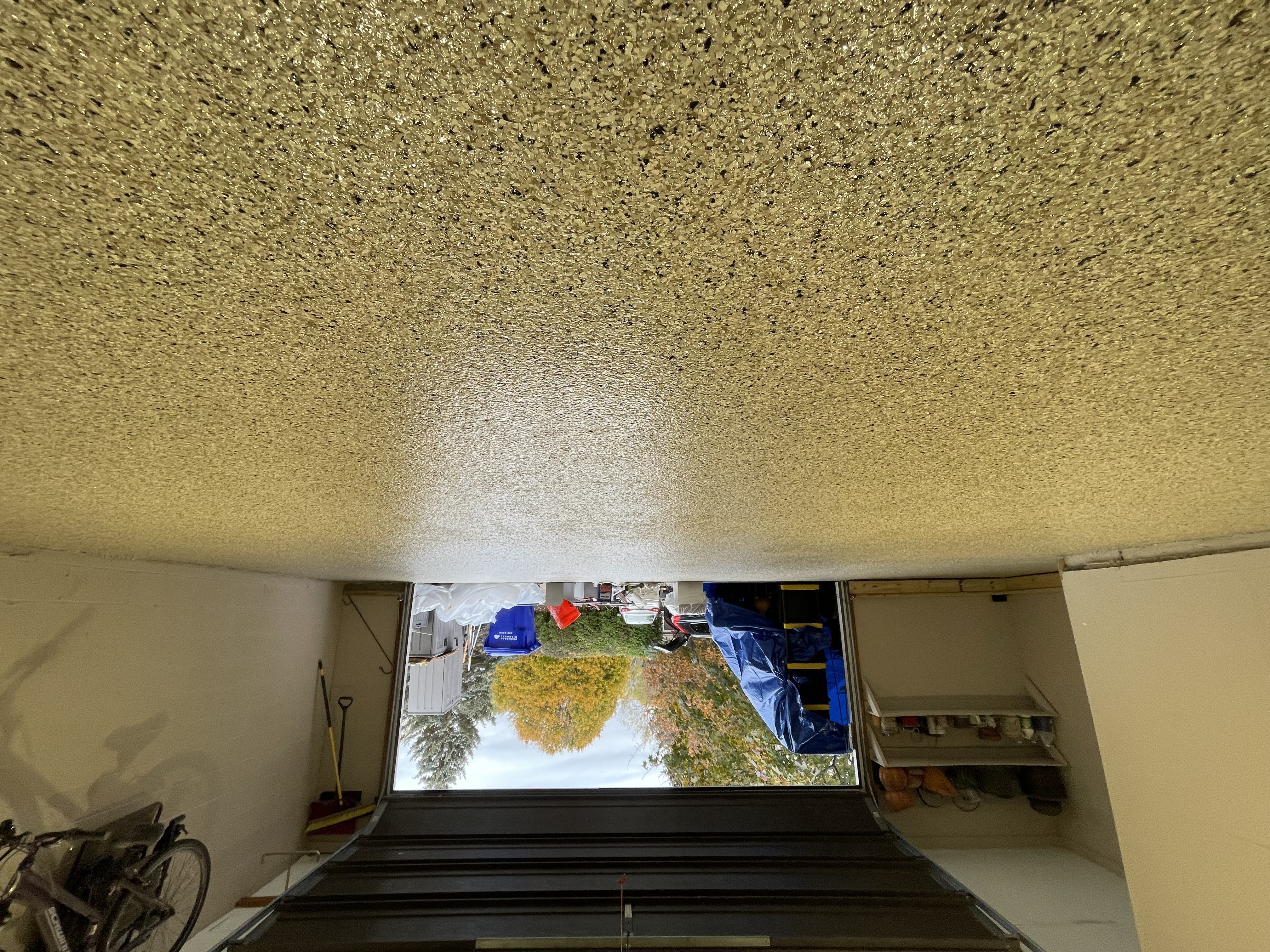
Topcoat (polyaspartic): Identical glossy, durable finish on both—no visual or daily performance difference.
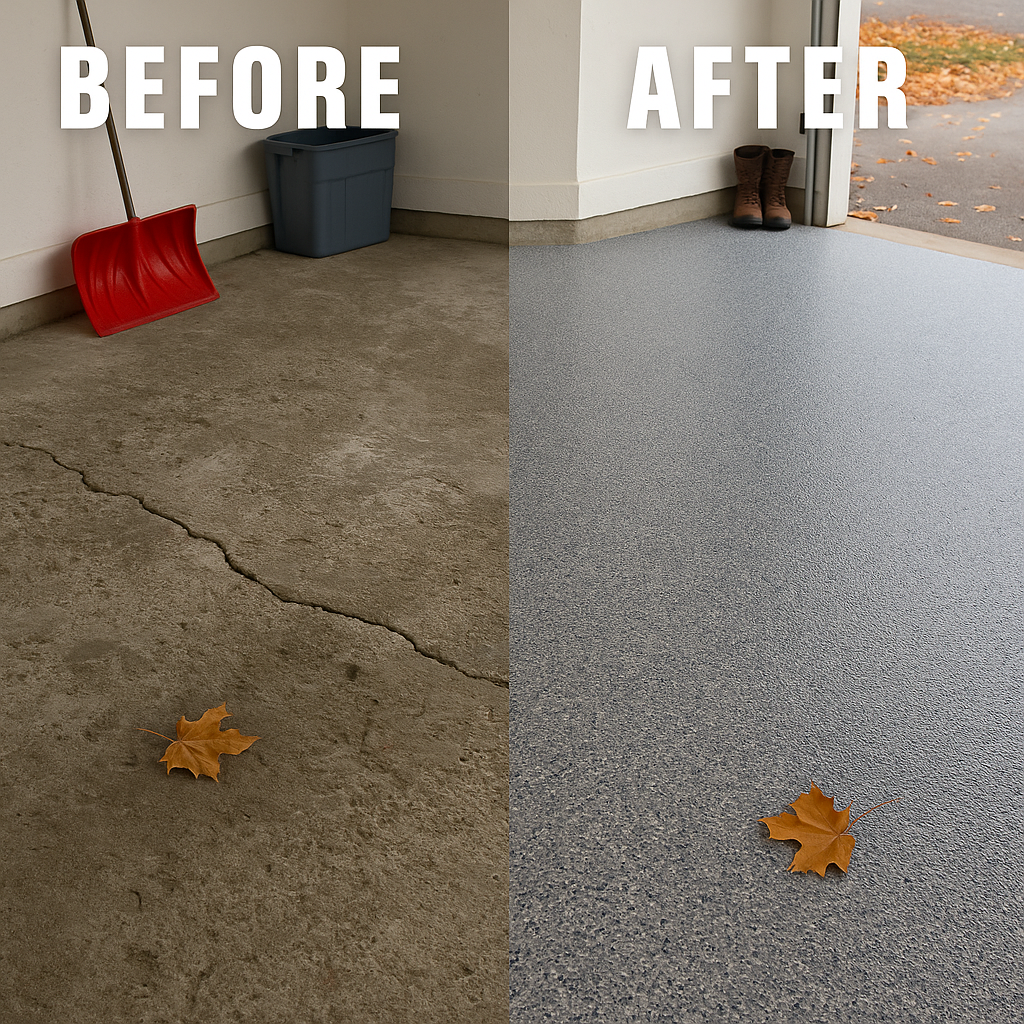
Bottom Line for Your Rochester Garage Go epoxy (with MVB) if moisture could be lurking—better vapor resistance and adhesion mean fewer callbacks in our climate. Choose polyurea for bone-dry slabs where speed and flexibility matter most. We offer both, test every job locally, and recommend what fits your space—no hype, just results.
Questions or ready for a free moisture test and quote? Hit us up—we're Rochester-based and here to help.
Sources/References
Industry specs (e.g., Croccoatings, Resinwerks): Epoxy MVB up to 25 lbs MVT/1,000 sq ft/24 hrs (ASTM F1869); polyurea often <5 lbs without add-ons.
ASTM F1869 (calcium chloride MVT test) and ASTM F2170 (RH) standards.
Adhesion: ASTM D4541/D7234 pull-off tests showing epoxy systems >300–400 PSI concrete failure.
Local insights from Rochester-area pros and climate factors (freeze-thaw, moisture push).